

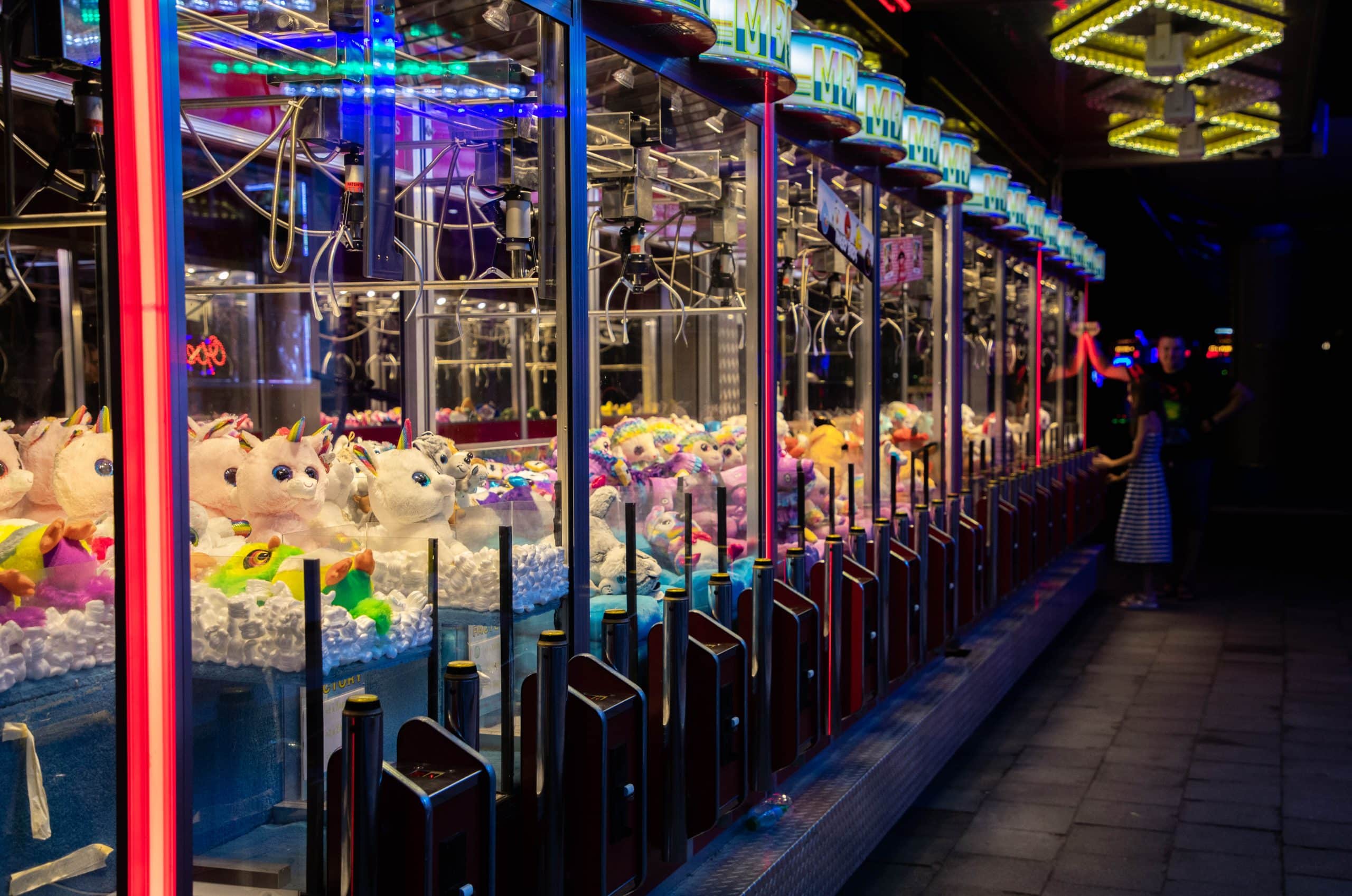
One of the fastest-growing trends in arcade operations today is the rise of crane rooms, often called Clawcades. These dedicated spaces are filled with crane machines and prize merchandisers, creating a highly engaging, repeat-play experience for guests. When designed and managed effectively, crane rooms can deliver exceptional margins, whether operating as a stand-alone attraction or as a high-performing addition to a family entertainment center (FEC).
Below are eight practical, revenue-focused strategies to help you optimize performance, increase play volume, and keep your crane room running at peak efficiency.
1. Location, Location, Location
The most successful crane rooms are typically located in areas with high foot traffic where visibility and impulse play drives consistent volume. However, premium locations often come with high occupancy costs, which can quickly erode margins if performance fluctuates. Since crane rooms are relatively easy to launch, the category has expanded rapidly, leading to the possibility of market saturation in some regions.
To manage this risk, prioritize flexible deal structures whenever possible. Revenue-share agreements or locations with low fixed rent can help align costs with performance and reduce downside exposure. It is also wise to be cautious about committing to long-term leases, particularly those that include personal guarantees, as they can significantly increase financial risk if market conditions change.

2. Buy the Right Machines
Invest in machines that are visually striking and immediately draw attention from across the room. Units with programmable video displays in the marquee are especially effective, as they allow you to showcase prizes, run promotions, and keep the presentation fresh without changing physical signage.
Equally important is sourcing equipment from reputable manufacturers with strong U.S.-based service and parts support. Reliable technical backing minimizes downtime, protects revenue, and ensures your operation remains sustainable as you scale. While importing cranes directly from overseas may appear cost-effective, it often introduces complexities around compliance, logistics, warranties, and serviceability. Without prior experience navigating these requirements, direct importing can create costly challenges that outweigh the upfront savings.
3. Merchandise Your Machines Like a Retail Store
Your crane machines should be presented with the same care and intentionality as a retail window display. Think of the polished storefront windows outside a department store – clean, inviting, and designed to stop people in their tracks. The glass should be spotless, lighting should highlight the prizes, and inventory should always appear abundant, neatly arranged, and easy to see from a distance.
Maintaining this standard in a high-traffic crane room can be challenging, but it is critical to performance. Busy locations require frequent restocking and ongoing attention from staff to ensure machines never appear empty or disorganized. A well-merchandised machine signals quality, increases perceived value, and encourages more plays, ultimately driving higher revenue.

4. Track and Monitor Performance Data
Successful crane rooms stay closely aligned with customer preferences. Understanding what players want and how those preferences evolve allows you to stock prizes that consistently generate plays and repeat visits. Reviewing performance data regularly helps you identify emerging trends early and avoid tying up cash in items that don’t resonate.
Focus on what actually moves. Filling machines with random or purely personal picks rarely maximizes revenue. Maintain simple tracking systems to measure how each item performs relative to total sales weekly. When a product’s performance declines compared to its share of revenue, it’s a strong signal that it’s time to refresh the mix.
Use sell-through rates to guide purchasing decisions. Instead of relying on intuition, reorder based on proven demand and historical performance. Be cautious about large quantity discounts that can lead to excess inventory and slower turnover. Healthy rotation keeps the experience feeling fresh, improves cash flow, and ensures your machines consistently feature prizes players are excited to win.
5. Right-Size Inventory for Each Location
Selecting the right prize mix requires balancing playability, customer appeal, and operational practicality. Thoughtful inventory planning ensures your machines remain attractive, profitable, and easy to manage as demand changes.
Consider size and dimensions carefully. Products must fit the physical specifications of each crane and be appropriate for claw strength, drop zones, and play difficulty. Oversized or awkwardly shaped items can reduce win rates or create service issues.
Align product mix with your audience. The demographics of your location should guide your assortment. A mall, movie theater, or FEC may each attract different age groups and interests, so tailor your selection to what your players are most excited to win.
Balance perceived value across price tiers. A strong mix includes:
- Lower-cost items that are easier to win and build player confidence
- Mid-tier products that provide steady revenue
- Higher-value prizes that create excitement and aspirational play
Frequent winners create repeat players. Ensuring there are always attainable prizes helps maintain engagement and encourages continued play.
Plan for storage and replenishment. Plush and other crane-friendly items are bulky, so adequate storage space is essential to keep machines consistently full. Whenever possible, work with suppliers who can deliver new inventory quickly to reduce the need for large backstock and improve cash flow efficiency.
6. Lean Into Seasonal Themes and Pop Culture Events
Product demand in crane rooms is strongly influenced by seasonal trends, holidays, and cultural moments. Short, high-impact selling windows create excellent opportunities to refresh your mix and generate excitement if inventory is planned in advance.
Think beyond obvious holiday products. While themed items can perform well, overly specific designs often lose appeal immediately after the holiday passes. Instead, lean into broader seasonal cues that extend the selling window. For example, winter-themed plush or neutral cold-weather colors can perform well both before and after the holiday season, unlike highly specific holiday characters. Use color psychology to signal seasonality:
- Summer: bright, bold, energetic colors
- Fall & holiday season: rich, warm, festive tones
- Spring: pastel, soft, and light palettes
Capitalizing on holidays, trends, and local events helps drive impulse play and keeps the experience feeling fresh. Consider rotating themes around:
- School calendars and back-to-school periods
- Major holidays and gift-giving seasons
- Pop culture trends and viral products
- Community events and local celebrations
Leveraging entertainment and sports moments is another theme opportunity. Major movie releases often receive significant marketing support that increases foot traffic and awareness, making related themes particularly effective. Similarly, large sporting events like college basketball tournaments, professional league playoffs, international competitions, and global tournaments can provide timely inspiration for color schemes and product selection.
A thoughtful seasonal strategy keeps your crane room visually relevant, encourages repeat visits, and maximizes revenue during peak demand periods.

7. Communication and Team Coordination
Staffing needs will vary depending on volume and location performance. High-traffic crane rooms typically require dedicated labor to keep machines clean, stocked, and operating smoothly throughout the day. Lower-volume locations, however, can often be managed remotely with scheduled service visits, reducing labor costs while maintaining acceptable performance. The key challenge in unattended locations is keeping machines consistently full and visually appealing, which can be addressed by increasing visit frequency during peak periods.
Once inventory requirements and team structure are established, create clear service schedules for technicians, merchandisers, or route drivers. Adjust visit frequency based on seasonality, promotions, and anticipated traffic spikes. Provide simple, standardized checklists so every visit maintains consistent quality, including full machines, forward-facing prizes, clean glass, and location-specific merchandising adjustments.
Train staff to identify slow-moving items and rotate inventory efficiently. Because performance is closely tied to presentation, your team should understand visual standards and the importance of maintaining a balanced, attractive product mix that encourages play.
Periodic, unannounced audits by a manager help ensure standards are being followed across all locations. These spot checks reinforce accountability, maintain consistency, and protect the overall quality of the player experience.
8. Future-Proof with Smart Buying
Successful crane operations require constant attention to changing trends and customer preferences. Product demand can shift quickly, so maintaining flexibility in your purchasing strategy is essential. Keeping a modest reserve of proven, top-performing prizes allows you to respond to sudden spikes in popularity without scrambling for inventory. At the same time, avoid depending too heavily on untested or novelty items. Steady revenue is built on consistent performers supported by thoughtful experimentation.
Strong vendor relationships are a long-term competitive advantage. Investing time in building trust with suppliers can lead to more reliable fulfillment, improved pricing, and greater flexibility when you need quick restocks or product swaps. Negotiating terms that support fast replenishment helps you maintain fresh, well-stocked machines without carrying excessive back inventory.
Continue to closely monitor cost of goods sold (COGS), payout performance, and overall unit economics. Adjust product mix, pricing, and merchandising strategy as needed to maintain healthy margins while still delivering a satisfying player experience. Avoid software or configurations that prevent players from winning until a preset financial threshold is reached. In many jurisdictions, this type of system is restricted or prohibited, and transparent, skill-based play helps build trust, encourage repeat visits, and support long-term sustainability.
Turning Crane Inventory Strategy into Revenue
A successful crane room business is built on consistent execution and attention to detail. It’s not simply about refilling machines – it’s about curating an engaging, constantly evolving experience that encourages repeat play. Every element, from product mix to presentation to operational discipline, contributes to an environment that feels exciting, fair, and worth returning to again and again.
For crane operators looking to take their inventory strategy and overall operations to the next level, Pinnacle Entertainment Group offers expert guidance and a full range of services.
With over 20+ years of experience, we help operators turn amusement floors into high-performing profit centers. Contact us today to learn how we can help you optimize crane operations, boost revenue, and keep your locations performing at their peak year-round.